
Nanny, family day care or a centre: choosing the right fit in Brisbane
By Mei Larsen · Updated 2026-07-11
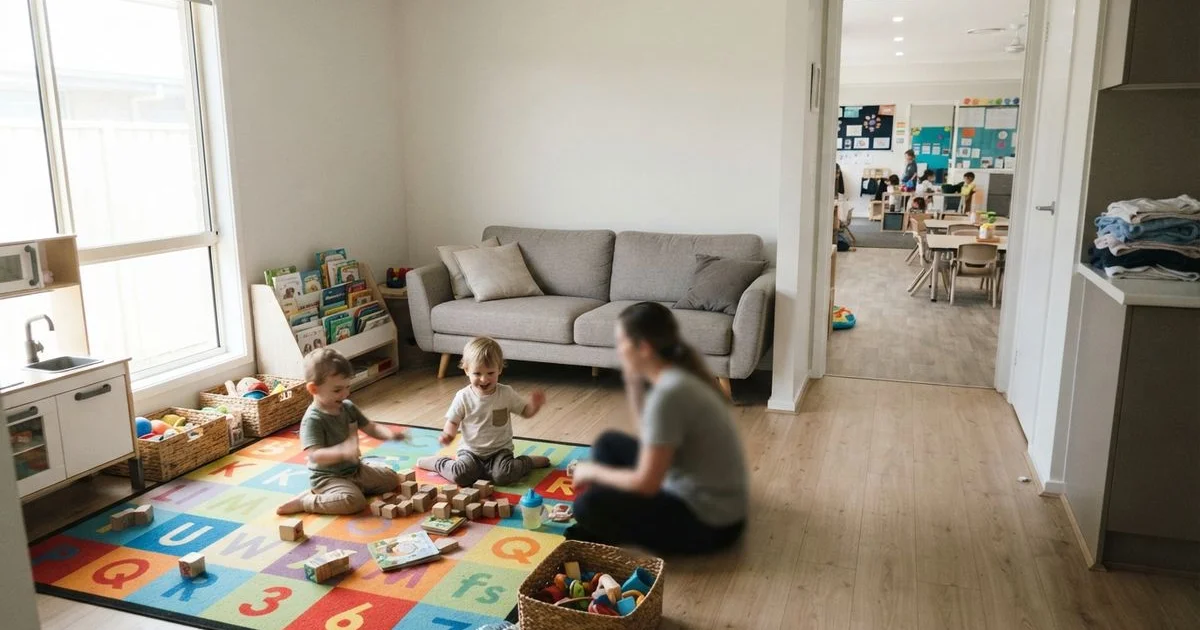
The right care type isn’t just about price, it’s about what kind of day actually suits your child and your family’s schedule. Brisbane families have three broad options: a long day care centre, or family day care or a nanny, and each comes with genuinely different trade-offs beyond the obvious cost difference.
The core differences
Long day care centres offer a structured program, dedicated age-based rooms, a rotating team of educators, and generally the most consistent operating hours (typically 6:30am to 6pm, weekdays). Group sizes are larger, but so is the exposure to other children, structured activities, and often a wider range of specialist programs like language, music or sport.
Family day care is run by a registered educator caring for a small group of children, usually in their own home. Group sizes are much smaller, often five or six children across mixed ages, which suits families who want a more home-like setting or a child who does better with fewer peers and more individual attention. Hours can be more flexible than a centre, since it depends on the individual educator’s availability.
A nanny, whether private or shared with another family, offers the most individualised care and the most flexible hours, often extending into evenings or weekends that no centre or family day care educator would cover. It’s also generally the most expensive option per child, though a shared nanny arrangement between two families can bring the cost down meaningfully.

Comparing the three at a glance
| Factor | Long day care centre | Family day care | Nanny |
|---|---|---|---|
| Typical group size | 8-25+ per room | 4-7 children | 1-4 (your own or shared) |
| Setting | Purpose-built centre | Educator’s home | Your home |
| Hours flexibility | Fixed, usually 6:30am-6pm | Varies by educator | Most flexible |
| Relative cost | Moderate | Generally lower | Generally highest |
| CCS eligibility | Yes, if approved | Yes, if approved | Only under specific in-home care rules |
Questions to help you decide
Ask yourself how your child tends to respond to groups: does a busier, more social setting energise them, or does a smaller, quieter group help them settle faster? Consider your actual work hours too, if you regularly need care before 6:30am, after 6pm, or on an irregular roster, a centre’s fixed hours may not work at all, and family day care or a nanny becomes less of a preference and more of a necessity.
It’s also worth thinking about backup. Centres generally have other staff to cover if an educator is sick, while a single family day care educator or nanny being unwell can mean no care at all that day unless a backup arrangement is already in place. Ask any family day care educator directly what their sick-day and holiday cover looks like before enrolling.
Mixing and matching
None of these options are mutually exclusive. Some families use a centre for the bulk of the week and lean on a nanny or family day care for early starts, late finishes, or casual days that don’t fit a centre’s roster, particularly when work hours are irregular or shift-based.
Thinking beyond the current stage
Your family’s needs at six weeks postpartum look very different to your needs once your child is a chatty three-year-old ready for more social interaction and structured activities. Family day care and a nanny arrangement often suit the earliest, most individualised stage well, then some families shift toward a centre as their child grows and starts wanting more peer interaction, structured programs, and preparation for kindergarten. There’s no obligation to stick with your first choice for years; it’s worth reassessing as your child’s needs change rather than assuming the initial decision is permanent.
A practical starting point
If you’re genuinely undecided, start by ruling out whichever options don’t fit your logistics at all, hours that don’t match your work schedule, or a budget that simply doesn’t stretch to a private nanny, then compare what’s left based on your child’s temperament and your own gut feeling after meeting the actual people involved. The right fit tends to become obvious once you’ve narrowed the field to two or three genuinely workable options and spent time with each in person.
Whichever direction you lean, tour or meet the actual educator or centre team before committing. A strong reputation on paper still comes down to whether your specific child settles well with that specific person or group. Compare options across Brisbane on our directory, scored using our methodology.
Questions people ask
- Is family day care cheaper than a long day care centre?
- Generally yes, family day care tends to sit below the average long day care fee, though it varies by educator and how many children they care for at once. A private in-home nanny is usually the most expensive option, especially for one child.
- Does the Child Care Subsidy apply to family day care and nannies?
- It applies to family day care through a CCS-approved educator. It generally does not apply to a privately arranged nanny unless they're engaged through an approved in-home care provider under specific eligibility rules, so check this directly before assuming a subsidy applies.
- Which option is best for a child who gets overwhelmed in group settings?
- Family day care or a nanny typically offer a smaller group size and more individual attention, which tends to suit children who find larger centre environments overstimulating, though every child and every provider is different.
- Can I combine a centre with family day care or a nanny?
- Yes, some families use a centre for most days and a nanny or family day care for early mornings, late pickups, or casual gap days, particularly if their work hours don't line up neatly with a centre's opening times.