
Helping your child settle into long day care in Brisbane
By Mei Larsen · Updated 2026-07-09
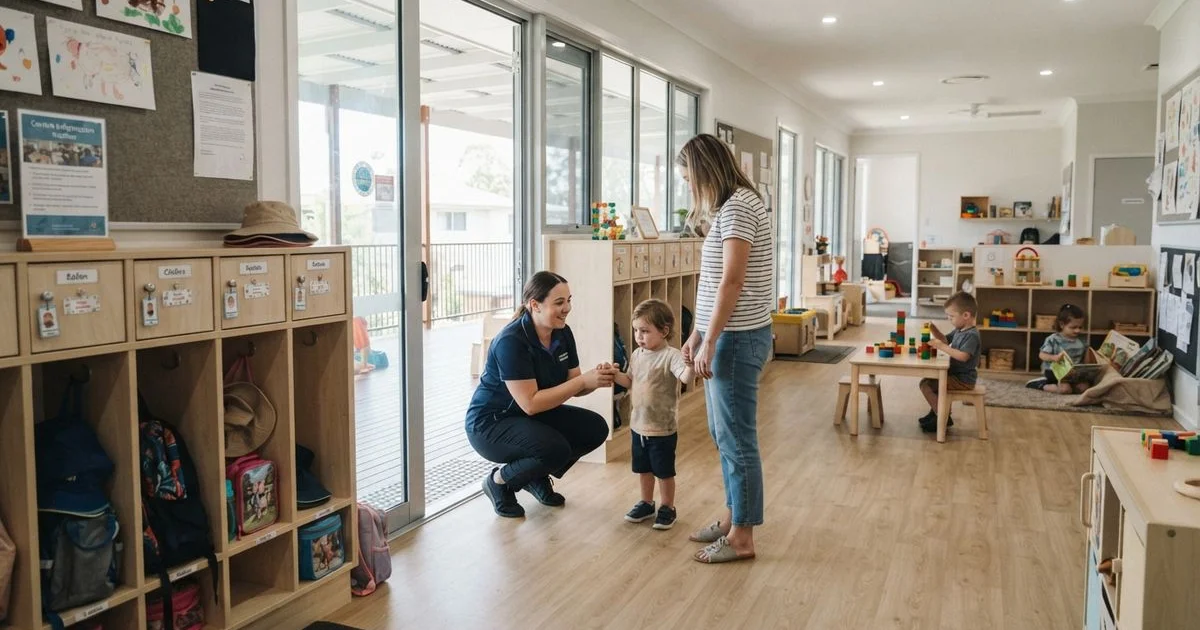
Drop-off tears are one of the most common things parents brace for before starting long day care, and one of the things centres are best set up to handle. Across Brisbane centre reviews, the theme that comes up again and again isn’t facilities or programs, it’s whether staff are genuinely good at turning a reluctant, anxious start into a child who’s happy to walk in the door. That skill exists, and there’s a lot you can do at home to support it.
What a good settling-in process looks like
Strong centres don’t just wait for your child’s official start date and hope for the best. Many run one or two shorter orientation visits beforehand, sometimes with a parent present, so your child sees the room and meets an educator before the first full day. Ask your centre directly whether this is part of their process; if it isn’t offered, you can often request it.
On the actual first days, a good educator will actively manage the drop-off rather than leaving your child to cry it out alone: getting down to their level, offering a specific activity to transition into, and giving you a status update later in the day so you’re not left wondering. This is worth asking about directly on a tour, since it’s one of the clearest differences between centres in parent feedback.
What helps at home
Keep your goodbye short, warm and confident. A long, hesitant goodbye where you keep coming back “one more time” tends to prolong the distress rather than ease it, because it signals to your child that leaving is something to be anxious about. A consistent, brief goodbye ritual, a hug, a wave, a specific phrase, gives your child something predictable to hold onto.
Try to avoid stacking your child’s first week of care on top of other major changes, a house move, a new sibling arriving, or a change in your own work schedule, if you have any flexibility in timing. Children generally cope better with one big adjustment at a time.
Talk about the day ahead in simple, positive terms without over-explaining or over-promising. “You’re going to see your friends and do painting today” works better for most toddlers than a long, anxious explanation of why you have to go to work.
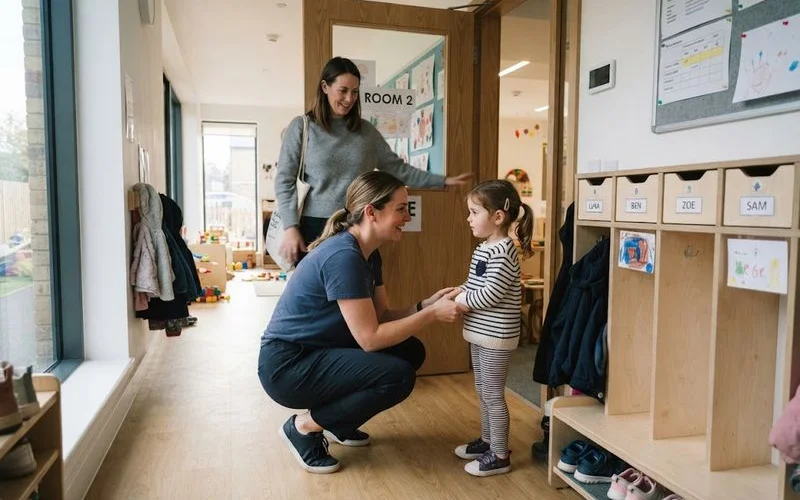
A rough settling-in timeline
| Stage | What’s typical |
|---|---|
| First few days | Some crying at drop-off is common; most children settle within the hour |
| First 1-2 weeks | Drop-off usually gets shorter and less distressed each week |
| 3-6 weeks | Most children have a clear routine and often start asking to go |
| Beyond 6 weeks with no improvement | Worth a direct conversation with your educators about a different approach |
When to raise concerns with the centre
If your child’s distress isn’t easing at all after several weeks, if they seem withdrawn rather than upset, or if you notice a sudden regression after previously settling well, it’s worth a direct conversation with your educators rather than assuming it will resolve on its own. Reviews across Brisbane centres consistently point to communication as the difference-maker here: centres that proactively update parents during a hard settling-in period, rather than leaving them to wonder, are the ones families trust most.
It’s also worth remembering that a child who settles brilliantly at one centre might struggle more at another, even with a similar program, simply because of the specific educators and room dynamic. If settling-in genuinely isn’t improving after a fair trial, it’s a legitimate reason to look at other options rather than persisting somewhere that isn’t working. For children with additional needs or allergies, that trial period often needs extra support built in from day one; see our guide on choosing childcare for a child with additional needs or allergies for what to ask before you enrol.
Looking after yourself during the transition
Settling-in periods are hard on parents too, not just children. Walking away from a crying child, even knowing it’s temporary and normal, takes a real emotional toll, and it’s common to spend the first part of the day distracted or anxious wondering how things are going. If your centre offers a call or text update partway through the day, take them up on it, most parents find that first reassurance genuinely settles their own nerves as much as it confirms their child is doing fine.
It’s worth giving yourself the same grace you’d give your child: a rough few mornings doesn’t mean you’ve made the wrong choice, and most families look back on this period as brief in hindsight, even though it can feel drawn out while you’re in it.
If a second child is starting
Settling-in often looks different for a second or third child, who may pick up cues from an older sibling already attending, sometimes making the transition easier, sometimes harder if the older child has expressed reluctance about the centre themselves. If you have another child already enrolled, it’s worth mentioning this to your educators, since many centres will actively use the sibling connection, a shared drop-off, a familiar face in the yard, to help a younger child settle in faster.
Compare centres and read what recent families report on the Brisbane childcare directory, ranked using our methodology.
Questions people ask
- How long does it usually take a child to settle into long day care?
- Most children take somewhere between two and six weeks to settle into a comfortable routine, though some adjust within days and others take a full term, particularly toddlers going through separation anxiety for the first time. There's a wide normal range here.
- Is it normal for my child to cry at every drop-off for weeks?
- It's common in the first week or two, and for many children it fades quickly once a routine forms. If crying is intense, doesn't ease at all after several weeks, or your child seems distressed rather than just upset at the goodbye, raise it directly with your educators.
- Should I stay longer at drop-off if my child is upset?
- Generally no. A short, warm, confident goodbye is easier for most children to recover from than a long, drawn-out one, even though it feels harder for the parent in the moment. Ask your centre for their specific settling-in approach, since some run structured orientation visits before your child's official start date.
- What can I do at home to help the transition?
- Keep mornings predictable, talk positively about the day ahead without over-explaining, and avoid scheduling your child's first week to coincide with other big changes, like moving house or a new sibling, if you can help it.