
Illness and exclusion periods at Brisbane childcare centres
By Mei Larsen · Updated 2026-07-23
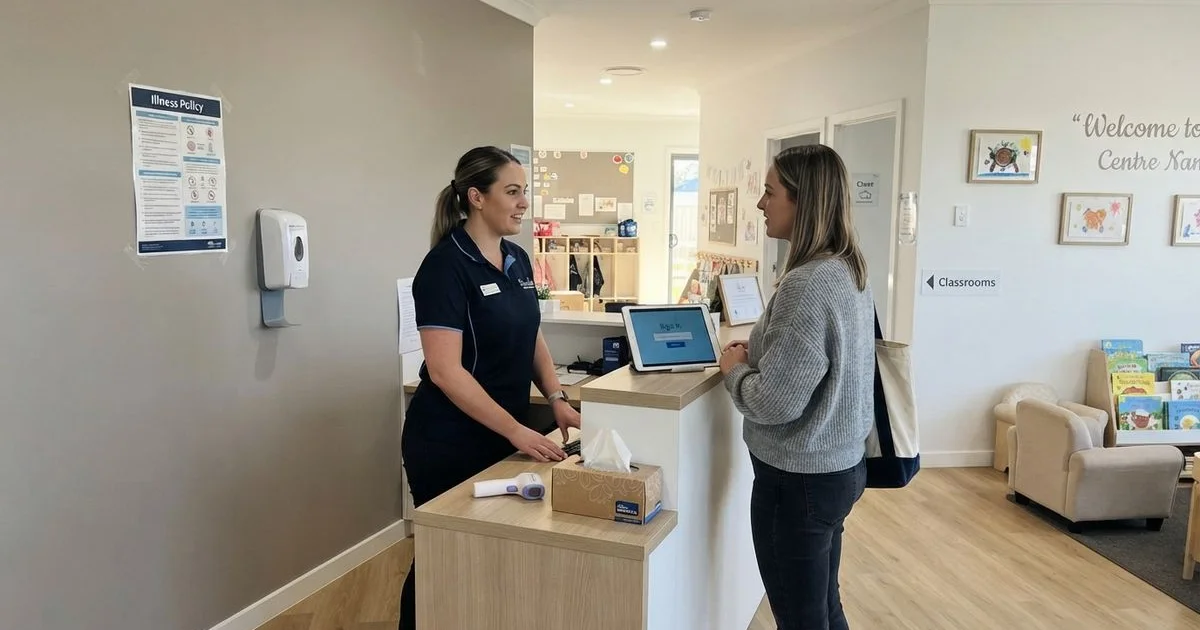
This is general information about how childcare exclusion policies typically work in Queensland, not medical advice. Always follow your specific centre’s written policy and consult a doctor about your child’s individual symptoms.
Every Brisbane childcare centre has to manage a genuine tension: keeping a group of young children safe from spreading illness, while not sending every family home over a runny nose. Understanding roughly how exclusion periods work, and why they exist, makes the inevitable sick-day phone call a lot less stressful.
Why exclusion periods exist
Young children in group care settings, particularly long day care and family day care, are in close contact for extended hours, sharing toys, food, and close physical space with educators and other children. A single child attending with an infectious illness can spread it through a whole room within a day or two. Exclusion periods exist to slow that down, protecting other children, families, and centre staff, not to punish a family for an inconvenient sick day.
Common conditions and typical exclusion guidance
Queensland childcare centres generally follow public health guidance for common illnesses. This is a general guide only, individual centre policies and current health advice can vary, so always confirm directly with your centre and your GP for anything beyond a mild, obvious cold.
| Condition | General exclusion guidance |
|---|---|
| Fever | Until fever-free for 24 hours without medication |
| Vomiting or diarrhoea (gastro) | Until at least 24 hours symptom-free |
| Conjunctivitis | Until treatment has started and discharge has cleared, per centre policy |
| Chickenpox | Until all blisters have dried and crusted over |
| Hand, foot and mouth disease | Until blisters have dried, per centre policy |
| Mild cold, no fever | Often no exclusion required, but check your centre’s specific policy |

Planning for the inevitable sick day
Every family in group care eventually gets the mid-morning call to come and collect a child who’s spiked a fever or started vomiting. It’s worth having a rough plan before it happens: who can leave work at short notice, whether backup family day care or a relative is realistic for a multi-day exclusion, and how your workplace handles unplanned leave for a sick child. Families new to group care are often surprised at how frequently minor illnesses circulate in the first few months, this tends to settle down as your child’s immune system builds up exposure over time.
Questions worth asking your centre
Ask directly what their written illness policy actually says, rather than relying on a general sense of “the usual rules.” Ask, too, whether a medical certificate is required for early return in specific cases, and how they handle a child who develops symptoms partway through the day, since a fast, clear communication process matters a lot in that moment. It’s worth pairing these with a broader set of safety and supervision questions to ask before you enrol.
When to loop in your GP
Recurrent or unusually severe illness, or an exclusion that doesn’t resolve within the expected window, is worth a conversation with your GP rather than just extending the exclusion period on your own judgement. Centres are generally happy to accept written medical clearance if a child’s illness or recovery timeline sits outside the typical pattern.
How centres communicate outbreaks
A well-run centre will generally notify families promptly when a notifiable illness, such as gastro or conjunctivitis, has been confirmed in a room, without naming the affected child, so other families can watch for symptoms and take precautions early. This kind of timely, specific communication is one of the clearer signs of a well-managed centre; delayed or vague notifications after an outbreak has already spread are a recurring theme in less favourable parent feedback. It’s a reasonable question to ask directly on a tour: how and how quickly do you let families know when something’s going around the room.
Reducing exposure without avoiding care altogether
Frequent minor illness in the first months of group care is common and usually temporary as your child’s immune system builds exposure, but there are still practical steps that help: reinforcing handwashing at drop-off and pickup, keeping your child home at the first sign of symptoms rather than pushing through a mild day, and asking your centre about their specific hygiene practices around shared toys and surfaces. None of this eliminates illness entirely, group care simply involves more shared exposure than staying home, but it can meaningfully reduce how often it happens.
Compare centres and their reported communication style on the Brisbane childcare directory, using our methodology.
Questions people ask
- How long does a child need to stay home with a cold?
- A mild cold without fever generally doesn't require exclusion, but check your specific centre's policy, as some ask children to stay home until symptoms like a persistent cough or runny nose settle, particularly for babies in the nursery room.
- How long is the exclusion period for gastro?
- Queensland guidelines generally recommend excluding a child with vomiting or diarrhoea until at least 24 hours after symptoms fully stop, since gastro spreads easily in group care settings.
- Do I need a medical certificate to return after some illnesses?
- For certain notifiable conditions, centres may ask for written clearance from a doctor before your child returns, particularly after conditions like conjunctivitis or a confirmed infectious disease. Ask your centre for their specific documentation requirements.
- Will I still be charged for days my child is excluded?
- Generally yes, most centres still charge the daily fee for a booked day even if your child is excluded due to illness, since the place is held for them regardless of attendance. Check your centre's specific policy on this.