
Childcare staff ratios and Working with Children Checks in Queensland
By Mei Larsen · Updated 2026-07-30
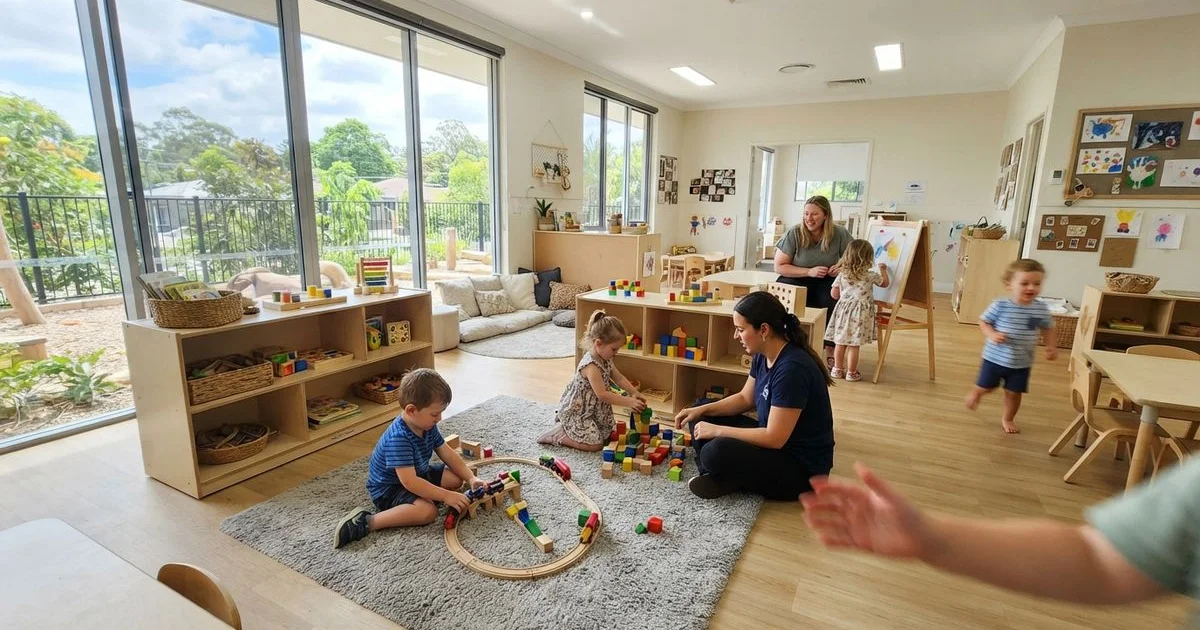
This is general information about Queensland’s regulatory requirements for childcare staffing, not legal advice. Requirements can be updated, so confirm current rules directly with the Department of Education or ACECQA for anything decision-critical.
Two numbers sit behind almost every childcare safety conversation in Queensland: the staff-to-child ratio, and whether every adult in the room holds a valid Working with Children Check. Neither guarantees a great centre on its own, but both are worth understanding so you know what a compliant centre is actually required to provide.
Staff-to-child ratios in Queensland
Queensland’s ratios are set under the National Quality Framework and get tighter the younger the children are, reflecting how much more direct support babies and toddlers need compared to older kindergarten-aged children.
| Age group | Minimum educator-to-child ratio |
|---|---|
| Birth to under 2 years | 1 educator to 4 children |
| 2 to under 3 years | 1 educator to 5 children |
| 3 years to school age | 1 educator to 11 children |
These are legal minimums, not targets. A centre is required to meet them at all times a room is operating, and some centres voluntarily run better-than-minimum ratios in certain rooms as a point of difference. It’s a fair question to ask directly on a tour: what’s the actual ratio right now in the room my child would join, not just the regulatory floor for that age group.

What a Working with Children Check verifies
In Queensland, this is known as a Blue Card, issued through Blue Card Services. It’s a legal requirement for anyone working or regularly volunteering with children, including childcare educators, and involves a national criminal history check plus ongoing monitoring, meaning a person’s card can be reassessed if new relevant information comes to light, not just checked once at hiring.
Every staff member with unsupervised access to children in a Queensland childcare centre is required to hold a valid Blue Card. This applies to permanent educators, casual relief staff, and even longer-term volunteers or students on placement.
What compliance does and doesn’t tell you
Meeting ratio requirements and holding valid Blue Cards is the regulatory floor every licensed centre must clear, it’s not optional, and a centre failing to meet either is operating outside the law. But compliance alone doesn’t tell you how warm, attentive or consistent a specific room’s educators actually are day to day. Two centres can both be fully compliant and still feel very different in practice, which is why pairing this baseline understanding with your own tour observations and recent parent feedback matters.
Questions worth asking directly
Ask a centre to confirm the ratio in your child’s specific room, rather than the general legal minimum for that age group. It’s also reasonable, though less commonly asked, to confirm that all educators working with your child hold a valid Blue Card, particularly for casual or relief staff who may be less familiar to you than the regular team.
How ratios and Blue Cards are actually checked
Queensland’s education regulator carries out both scheduled and unannounced compliance checks on approved services, covering ratios, staff qualifications, and Blue Card records among other requirements. A centre found operating outside its required ratio, or with a staff member lacking a valid Blue Card, faces regulatory action, which can range from a formal notice through to more serious consequences depending on the severity and whether it’s a repeat issue. This doesn’t mean every centre is under constant scrutiny, but it does mean the framework has real enforcement behind it, not just published guidelines.
Parents sometimes assume ratio compliance is something they’d only notice if it were badly broken, but subtler versions matter too: a room technically within ratio but relying heavily on unfamiliar casual staff during a busy period, for instance, can still feel understaffed in practice even if it’s compliant on paper. That’s part of why direct observation during a tour, and asking about staffing during peak drop-off and pickup windows specifically, adds real information beyond the regulatory minimum.
Bringing it together
Ratios and Blue Cards are the non-negotiable baseline, not the finish line. A centre that meets both but shows high staff turnover, vague answers about day-to-day staffing, or reluctance to let you observe an active room deserves more scrutiny than the compliance numbers alone would suggest. Use this regulatory understanding as your starting filter, then let your own tour, direct questions, and recent parent feedback fill in the rest of the picture.
Compare Brisbane centres and read what recent families say about staffing consistency on the directory, using our methodology.
Questions people ask
- What is the legal ratio for babies in Queensland childcare?
- Queensland requires one educator for every four children under two years old. The ratio eases as children get older, moving to one educator per five for two to three-year-olds, and one per eleven for children over three.
- Is a Working with Children Check the same as a police check?
- No, though it involves one. A Working with Children Check (known as a Blue Card in Queensland) is a specific screening for anyone working or volunteering with children, combining a national police history check with ongoing monitoring, and is a legal requirement to work in childcare.
- Can I ask to see a centre's current staff ratios?
- Yes, and it's a reasonable question to ask directly. Centres are required to comply with ratio requirements at all times, and a confident, specific answer about the ratio in your child's room is a good sign.
- Does a compliant ratio guarantee good supervision?
- Meeting the legal minimum ratio is a baseline requirement, not a guarantee of quality supervision on its own. It's worth pairing ratio compliance with direct observation of how attentive and engaged staff actually are during a tour.